One of the first things that surprises many first-time safari travelers is how much thought goes into simply getting from one camp to the next.
On a map, two safari camps may look relatively close together. In reality, the journey between them can take several hours or even a full day by road (that is, if there even is a road) vs just 15-45 minutes by small aircraft. Sometimes the road itself is part of the experience, winding through changing landscapes and offering unexpected wildlife sightings or a chance to pass through local villages. Other times, flying is what makes it possible to combine two very different ecosystems without spending half a day in a vehicle.
So, when it comes to fly-in versus overland safaris, there is no universal right answer.
At PATH+PLAIN, we consider the geography, the camps, the wildlife experience, the time of year, the time you have available, and the kind of trip you want to have before deciding how you should move between them.
Here’s what you need to know about bush flights, private charters, and overland travel, and when each makes the most sense.
The Short Version: Fly When Distance Is the Problem, Drive When the Journey Is Part of the Experience
A good rule of thumb is simple: Fly when you want to maximize time in prime wilderness areas. Drive when the journey itself adds something to the safari.
If two camps are separated by a long distance, particularly across a region with limited roads as our preferred remote camps often are, a bush flight can turn a tiring transfer into a short and even spectacular part of the adventure. Imagine flying over a remote volcanic crater only to discover it is filled with a shimmering soda lake dotted with thousands of pink flamingos – something you would not have otherwise been witness to.
If the camps are relatively close, or the route passes through interesting landscapes, conservation areas, villages, or wildlife-rich country, driving can be a better choice.
And sometimes the best itinerary uses a hybrid approach, resulting in a varied safari that feels seamless rather than rushed.
What Exactly Is a Bush Flight?
A bush flight is a small-aircraft flight connecting safari destinations, often landing directly at an airstrip near your camp.
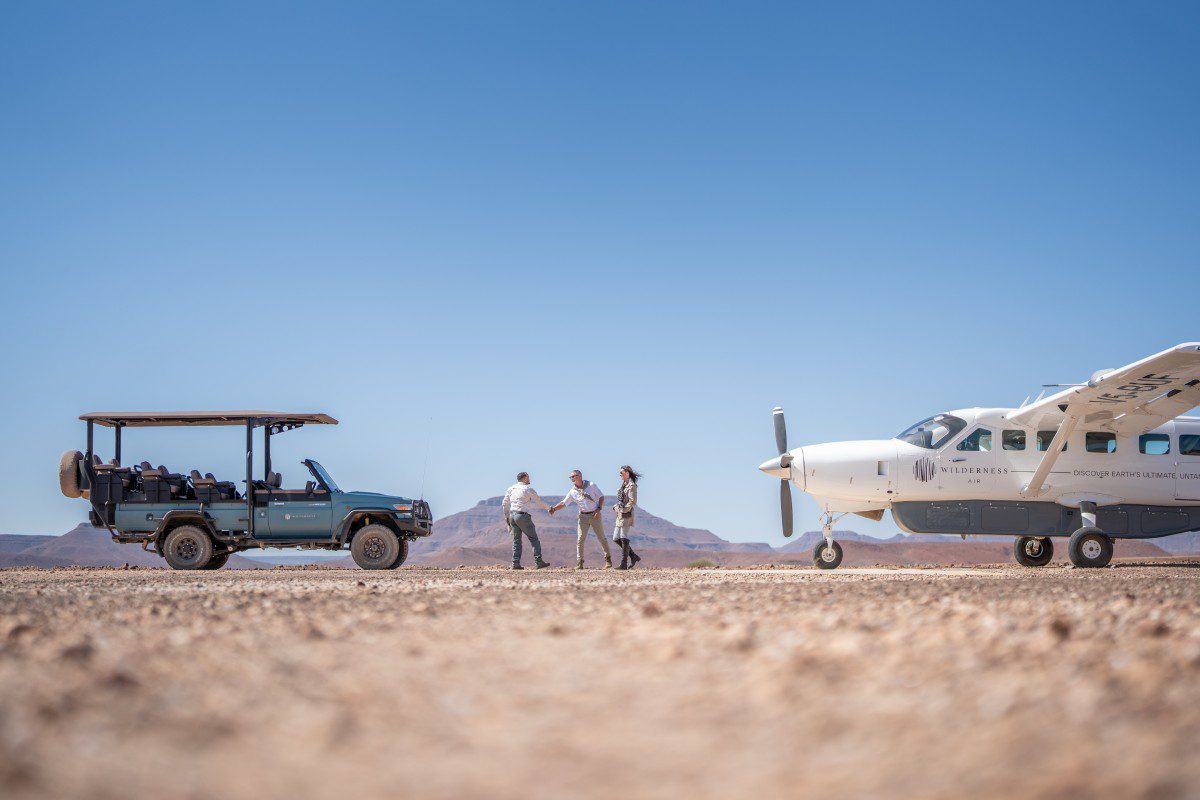
These aren’t conventional commercial flights. When connecting one camp to another, you’ll arrive at the airstrip from you safari vehicle, hand your luggage over to be loaded on board the 4-12 seater (Cessna Grand Caravans are the typical model), and off you’ll go flying over wilderness areas and epic landscapes, and land on a dirt or gravel airstrip where the next camp’s vehicle is waiting for you. Far from the lengthy check-in at a commercial airport, these flights are efficient and all part of the safari adventure.
PATH+PLAIN handles all of the logistics for you, so that you aren’t left trying to figure out which airstrip, which flight, or how your luggage gets from one camp to another.
Scheduled Bush Flights vs. Private Charters
Scheduled bush flights
Most safari travelers will use a scheduled bush flight at some point. These flights operate on established routes between small regional airports and airstrips. Because the aircraft may be carrying guests headed to a few different camps, the route may include intermediate stops – brief touchdowns to offload and board passengers.
The advantage of scheduled bush flights is price. You’ll pay a seat-rate, rather than having to cover the entire cost of flying the plane with only your companions to share the burden. The trade-off is that you don’t control every detail of the routing or timing, but in most cases, you’ll be looking at less than an hour of total travel time.
Private charters
A private charter is different. Instead of paying a seat-rate and sharing the aircraft with other travelers, the aircraft is arranged specifically for your party. Depending on the route and aircraft, this can give you greater flexibility with timing and routing and can be especially useful for families or groups.
Private charters can also make unusual combinations of camps possible, particularly when you’re trying to connect destinations that aren’t well served by scheduled flights.
The decision is ultimately about more than convenience. A private charter can buy you time and flexibility, which can be particularly valuable on a shorter safari. And depending on the number of travelers in your party, it isn’t always more expensive than scheduled flights.
What does this mean for luggage, you ask?
If you’re flying between camps, you’l need to pack light. Small aircraft have very limited luggage holds, and weight restrictions are part of the aircraft’s operating requirements. In East Africa, a common allowance is around 15 kg / 33 lbs per person, including carry-on, with soft-sided luggage required or strongly recommended depending on the operator, whereas in Southern Africa, most routes allow up to 20 kg / 44 lbs per person, including carry-on.
That means your enormous wheeled suitcase is not coming along. The good news is, you really don’t need it. Safari camps typically include daily laundry service in their rate, so a thoughtfully packed soft duffel is more than enough for a safari. If you’re traveling with additional luggage for an extended trip, we can usually arrange for larger bags to be stored while you’re in the bush and reunited with you later.
If you simply cannot meet the luggage restrictions, we can make allowances with advance notice… but be warned, this may require buying an entire additional seat.
Can I take camera equipment?
Yes, but camera equipment can complicate the luggage equation because the weight limit may include carry-on baggage. If you’re traveling with substantial photography gear, tell us when we’re designing your trip so we can plan for it.
When Driving Is Better
Flying is efficient. But efficient isn’t always better. Some of our favorite safari transfers are overland because the landscape between the camps is part of the experience.
A drive can take you through changing ecosystems, past local villages and working landscapes, or across areas where wildlife sightings aren’t confined to the hours when you’re officially “on safari.” In some destinations, the road journey tells you something about the place that you simply wouldn’t see from the air.
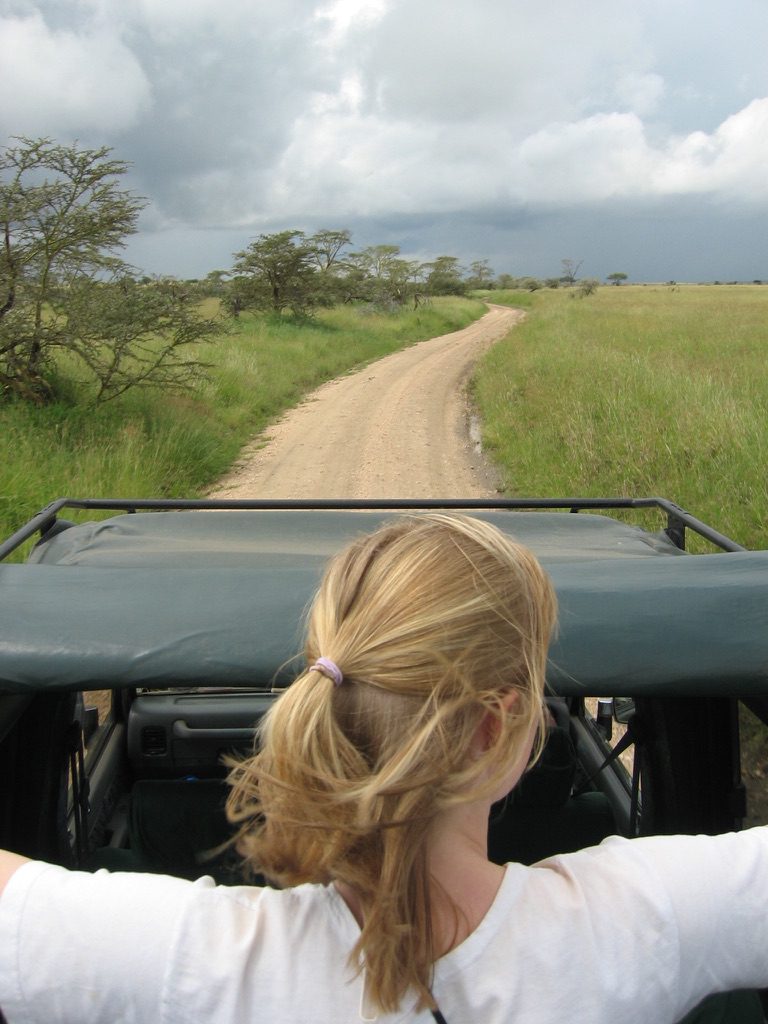
There is something wonderfully unhurried about leaving camp after breakfast, settling into the vehicle with your guide, and watching the landscape change as you travel. Sometimes, like when crossing the Serengeti, the whole point is to experience the enormity of it all.
Driving makes particular sense when:
- The camps are relatively close together.
- The route passes through interesting wildlife habitat.
- You want to experience the landscape rather than simply cross it.
- You’re traveling in a private vehicle with flexibility to stop along the way.
- You are visiting a region where road transfers are an important part of the experience.
- You have enough time that a few hours on the road doesn’t feel like time taken away from the safari. safaris
When Flying Is the Better Choice:
There are also times when driving simply doesn’t make sense. Imagine spending five or six hours crossing a large region just to reach your next camp—then arriving tired, checking in, and discovering that you’ve used much of a safari day getting there. In this case, a 45-minute bush flight can change the entire rhythm of the trip. Flying is particularly useful when:
- You’re covering significant geographic distance.
- You’re combining very different safari regions.
- You have a limited number of nights.
- You want to spend as much time as possible in camp and on safari.
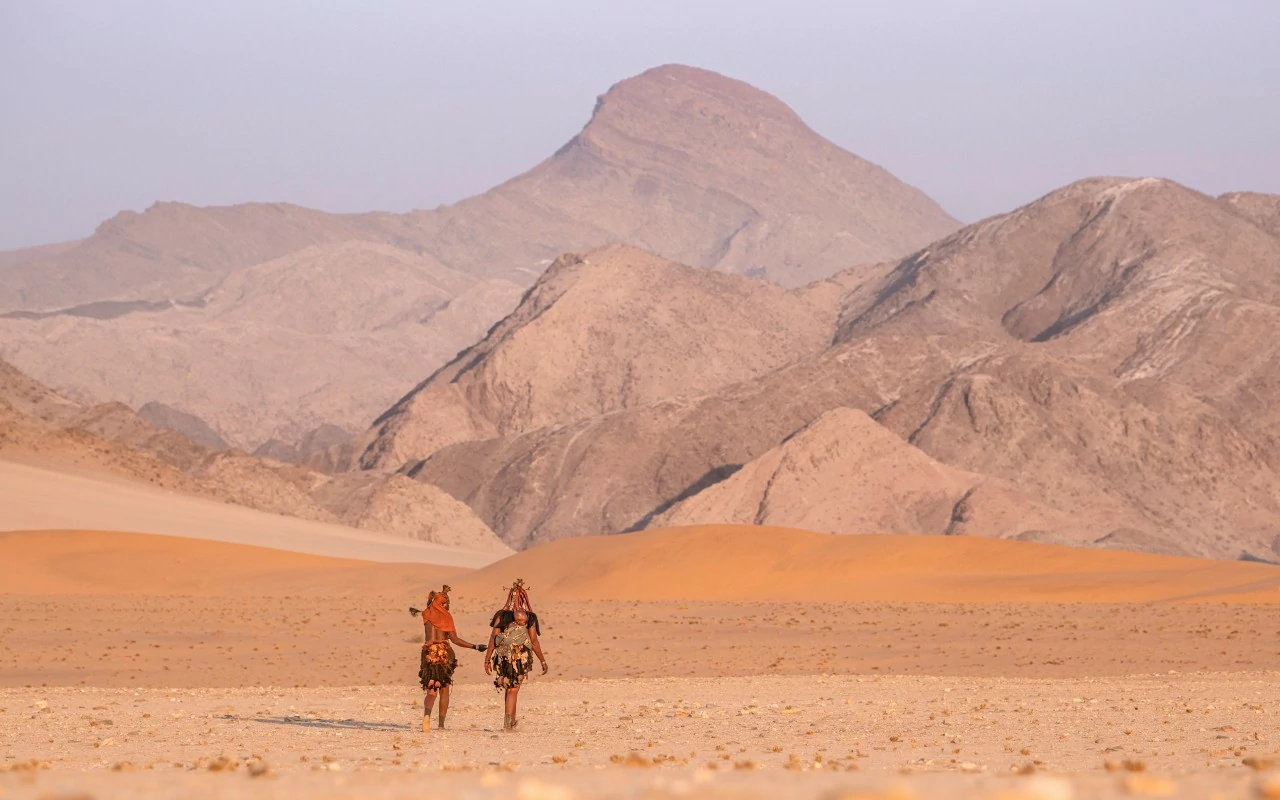
- The road journey would be long, rough, or repetitive – for example, Tanzania during the rainy season, or Namibia at almost any time of year.
- You are traveling between remote areas with established air connections.
- You want to avoid unnecessary backtracking.
This is one reason fly-in safaris can feel remarkably relaxed even when the itinerary covers a lot of ground. You’re not necessarily traveling less. You’re simply spending less of your valuable safari time getting there.
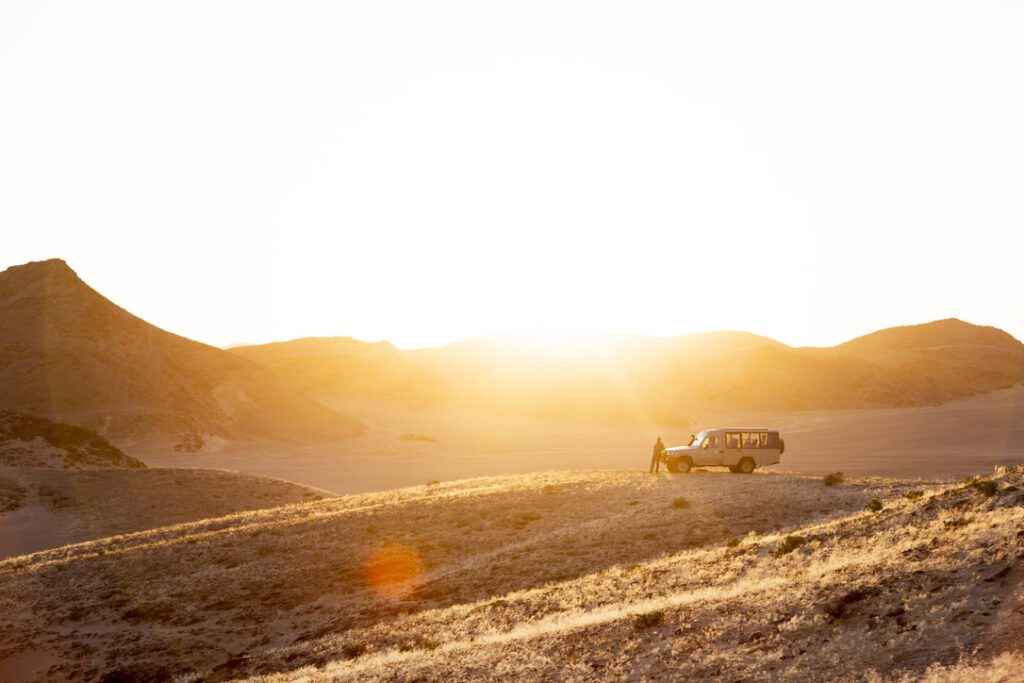
What About the Scenery?
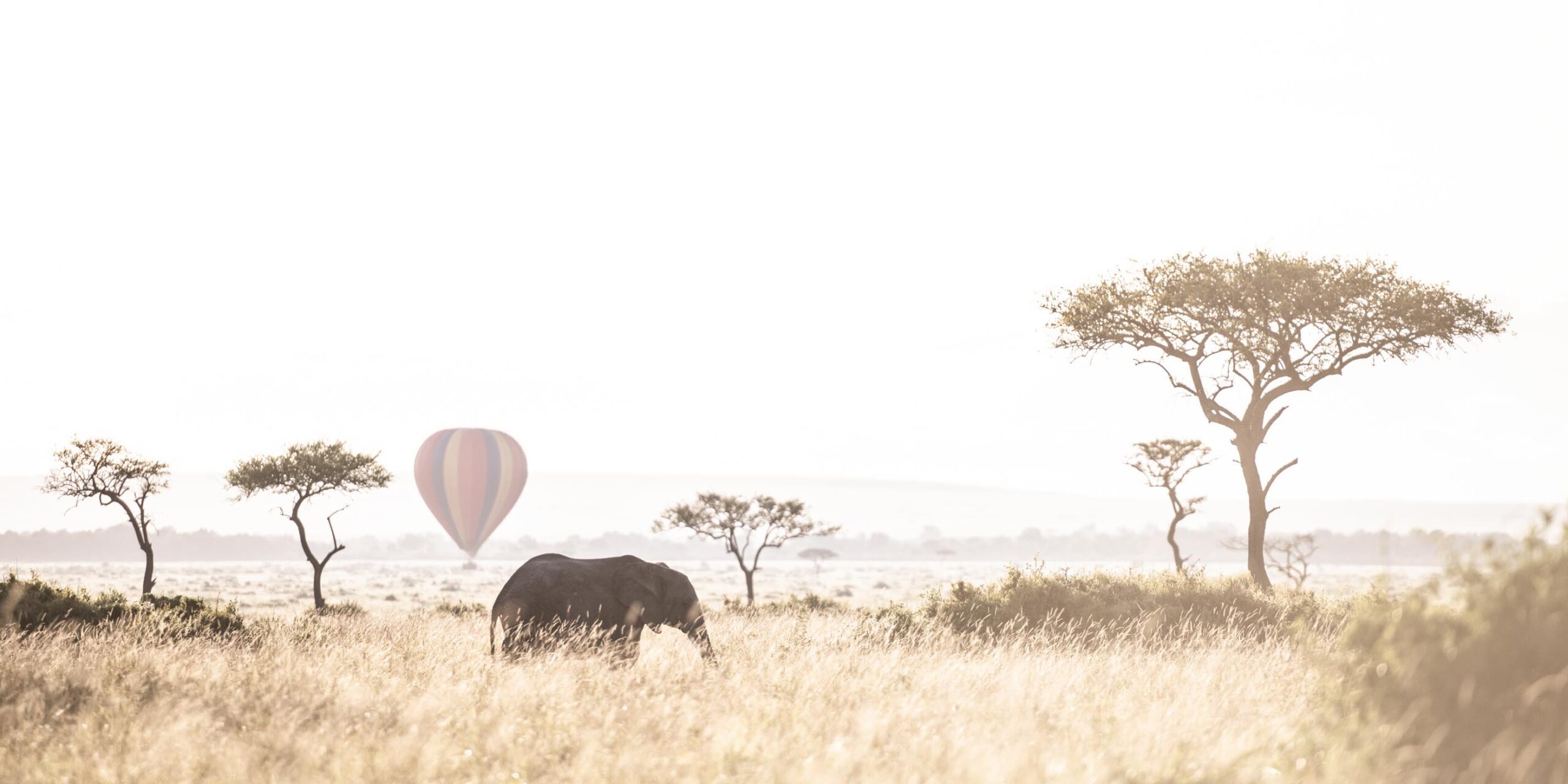
From a small aircraft, Africa looks completely different. You see rivers tracing their way through floodplains, enormous herds moving across the landscape, tiny ribbons of road disappearing into the wilderness, and the extraordinary scale of places like the Serengeti or the Okavango Delta.
It can be one of the most memorable parts of the trip.
But driving provides an up-close experience. From the ground, you notice the details: an elephant crossing the road, a herd of zebra appearing over a rise, a bustling village, a baobab tree, or the gradual transition from one landscape to another.
Flying provides perspective. Driving is full of texture. And a thoughtfully planned safari may be able to make room for both.
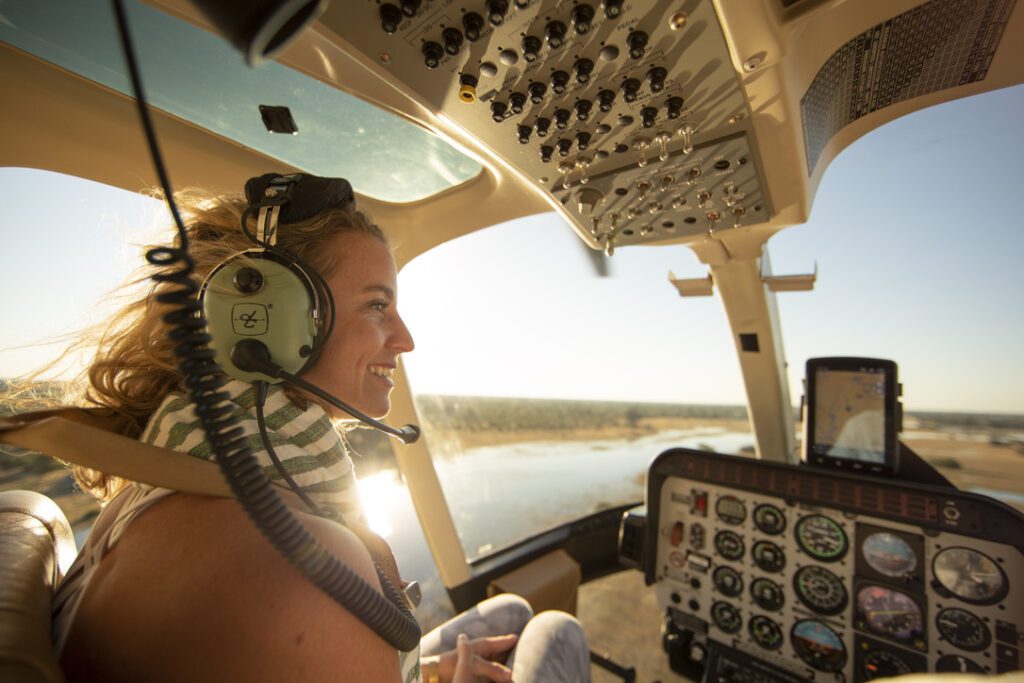
Why PATH+PLAIN Doesn’t Automatically Recommend Flying Between Every Camp
It can be tempting to look at a map and think, “Why not just fly everywhere?” Our answer is: because sometimes the best safari experience is the journey. If you’re spending three nights in one region and moving only an hour or two to another camp, a road transfer may actually give you another opportunity to be out in the landscape with your guide.
On the other hand, if you’re spending five hours driving simply because the camps happen to be connected by road, we’d question whether that’s the best use of your time. The goal isn’t to minimize driving. Instead, the goal is to make every element of your safari earn its place in the itinerary.
A Real-World Example: SkySafaris
Our Kenya SkySafari is a good example of how flying can create an efficient safari without sacrificing the experience on the ground. The itinerary connects Amboseli, Loisaba, and the Masai Mara using executive charter flights, while the time in each region is devoted to game drives, walking, cultural experiences, and other activities.
Instead of spending significant portions of the trip traveling between these very different landscapes by road, the itinerary uses air travel to connect them efficiently.
The result is a 10-day journey that feels varied without feeling rushed.
For travelers who want to experience several iconic regions of Tanzania without spending their safari moving from one road transfer to another, our Tanzania SkySafari follows the same basic philosophy: use air travel strategically, then spend your time where it matters… in the bush.
Explore our Tanzania SkySafari
The Best Safari Itineraries Use Geography to Their Advantage
At the heart of safari planning is the knowledge that a great itinerary isn’t simply a collection of beautiful camps – it’s a carefully considered sequence of places that work well, together.
We look at:
Where are the camps located?
Are they close enough for an enjoyable drive, or far enough apart that flying will make the trip dramatically better?
What will you see along the way?
A overland drive through productive wildlife habitat can be an experience in itself.
How much time do you have?
On an 8- or 10-day safari, saving several hours here and there can create meaningful additional time in the bush.
What kind of traveler are you?
Some people love the romance of a long overland journey. Others would rather spend those hours watching elephants from camp.
What happens when you arrive?
We consider whether a flight gets you to camp in time for an afternoon game drive, whether a road transfer can double as a game drive, and how the timing affects the overall rhythm of the itinerary. This is where thoughtful planning makes a difference.
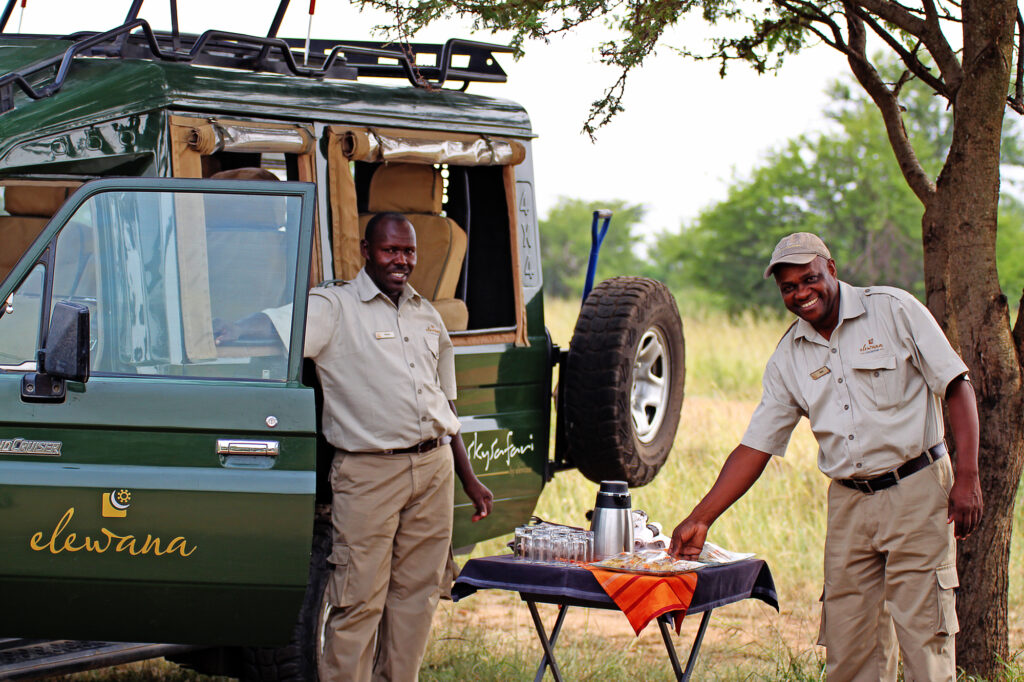
Is flying between camps more expensive than driving?
Not necessarily. A flight adds an air component, but the alternative may involve additional vehicle time, fuel, guide time, transfers, and potentially another night depending on the route.
We look at the entire itinerary rather than treating transportation as a separate line item.
Can I combine flying and driving?
Absolutely, and often that’s an ideal solution. We might fly you into a remote region where the distance makes flying worthwhile, then use a private vehicle for several days so you can explore that region properly. Or we might recommend a scenic overland transfer between two nearby camps and fly the longer leg later in the trip.
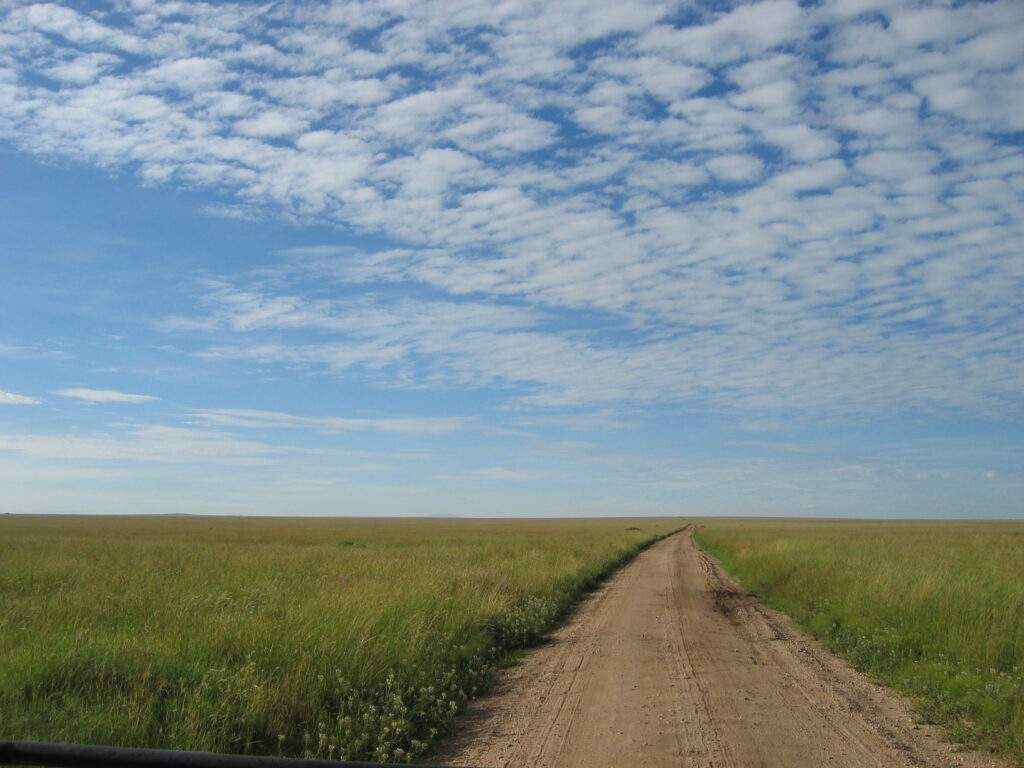
The PATH+PLAIN Approach
Safari logistics should disappear into the background. You should know where you’re going, what you’re doing, and what you need to pack – but you shouldn’t have to spend your safari thinking about flight schedules, luggage allowances, airstrips, or whether there will be someone waiting when you land. That’s our job.
We design the itinerary around the experience first, then work backward through the geography and logistics to make it work. Sometimes that means a bush flight, and sometimes it means a long, beautiful drive.
If you’re beginning to plan an African safari and aren’t sure how much time you should spend moving between camps, or whether you should fly, drive, or combine the two, get in touch today. We’ll help you build an itinerary that makes sense not just on a map, but in real life.
Call 1-802-222-6320 or email info@pathplaintravel.com to start the conversation.