There are few travel experiences more universally beloved in Africa than the sundowner.
Not the safari itself – though that’s undeniably a significant part of the magic. Not even the wildlife sightings that leave you talking about them for months afterward. The sundowner exists in its own category entirely: a sacred pause between the adventure of the day and the quiet wonder of the evening.
African sunsets are special. It begins with golden light, the kind that softens everything it touches.
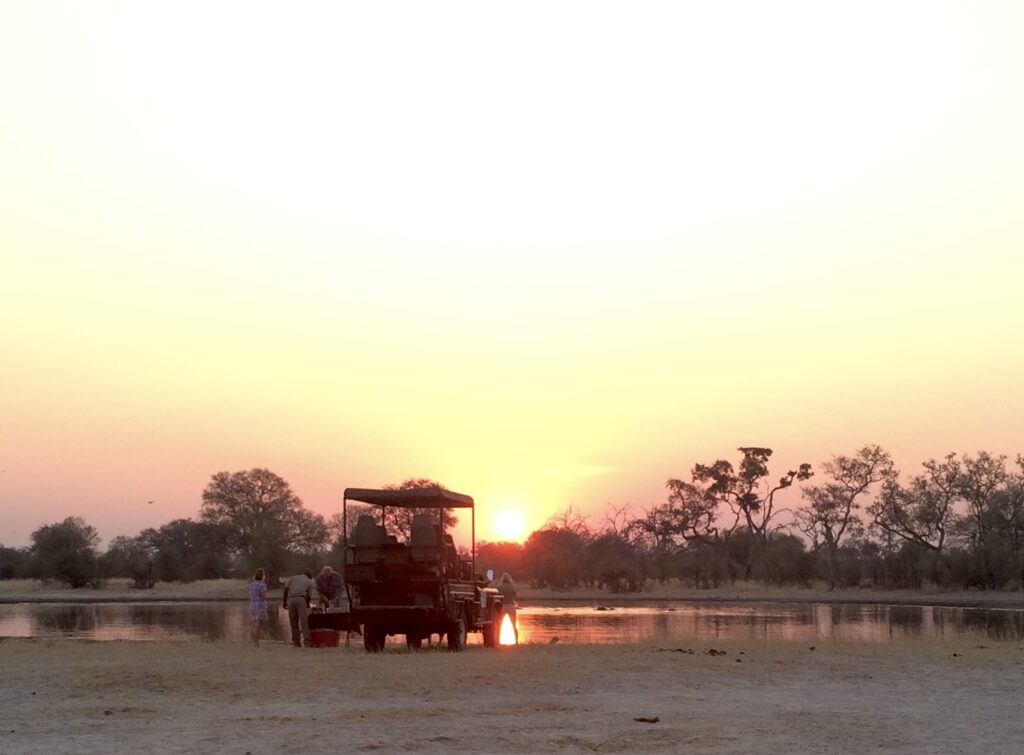
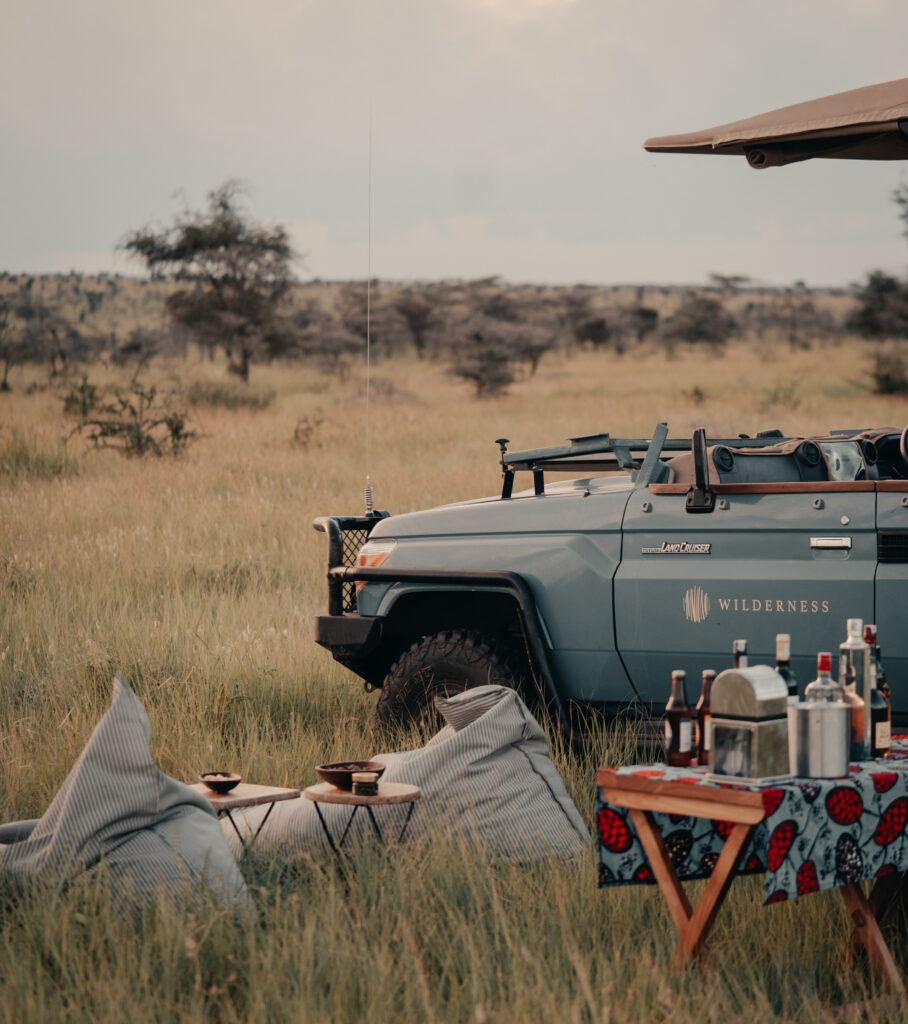
Your safari vehicle slows to a stop on an open plain. Dust settles behind the tires. Your guide unfolds a canvas table with practiced ease. Ice clinks into glasses. A bottle of South African wine appears, along with lager from somewhere impossibly cold. Of course there’s gin, possibly infused with local botanicals. Maybe there are warm savory bites fresh from the camp kitchen.
And then there’s the hush of a vast African landscape preparing for nightfall. As the sun dips low against the horizon, everyone instinctively grows quieter. For a few perfect minutes, nobody is rushing anywhere.
This is the sundowner – Africa’s most perfect ritual.
What Is a Safari Sundowner?
At its simplest, a sundowner is an evening drink enjoyed outdoors at sunset. But that definition doesn’t begin to capture why travelers remember them years later.
The sundowner is less about the drink itself and more about the feeling it creates.
It’s the collective exhale after a day of movement and discovery. A ritual of slowing down. A deliberate pause that invites you to absorb where you are rather than simply pass through it.
At many safari camps, particularly across Southern and Eastern Africa, sundowners are woven into the rhythm of the day. Safari drives often begin before dawn and continue through the cool hours of morning and late afternoon. By sunset, guests have spent hours immersed in landscapes that feel timeless – tracking elephants through mopane forests, watching lions stretch awake in tall grass, or following giraffes silhouetted against acacia trees.
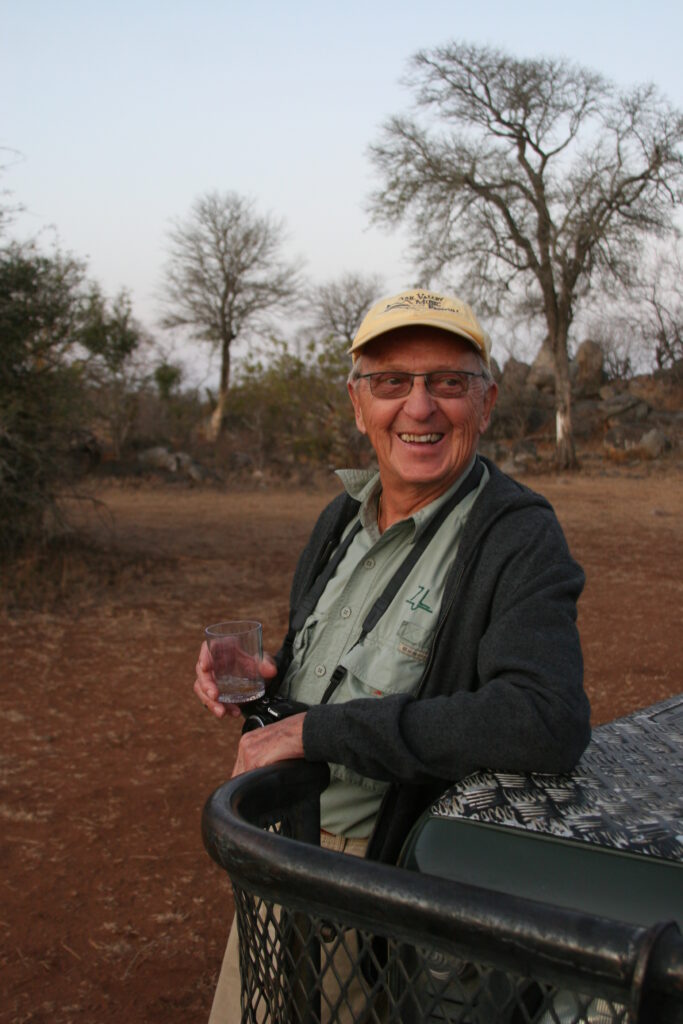
Then, just before darkness settles in, the vehicle stops. Out come the drinks, snacks, folding chairs, and stories.
No screens. No schedules. No notifications. Just sunset.
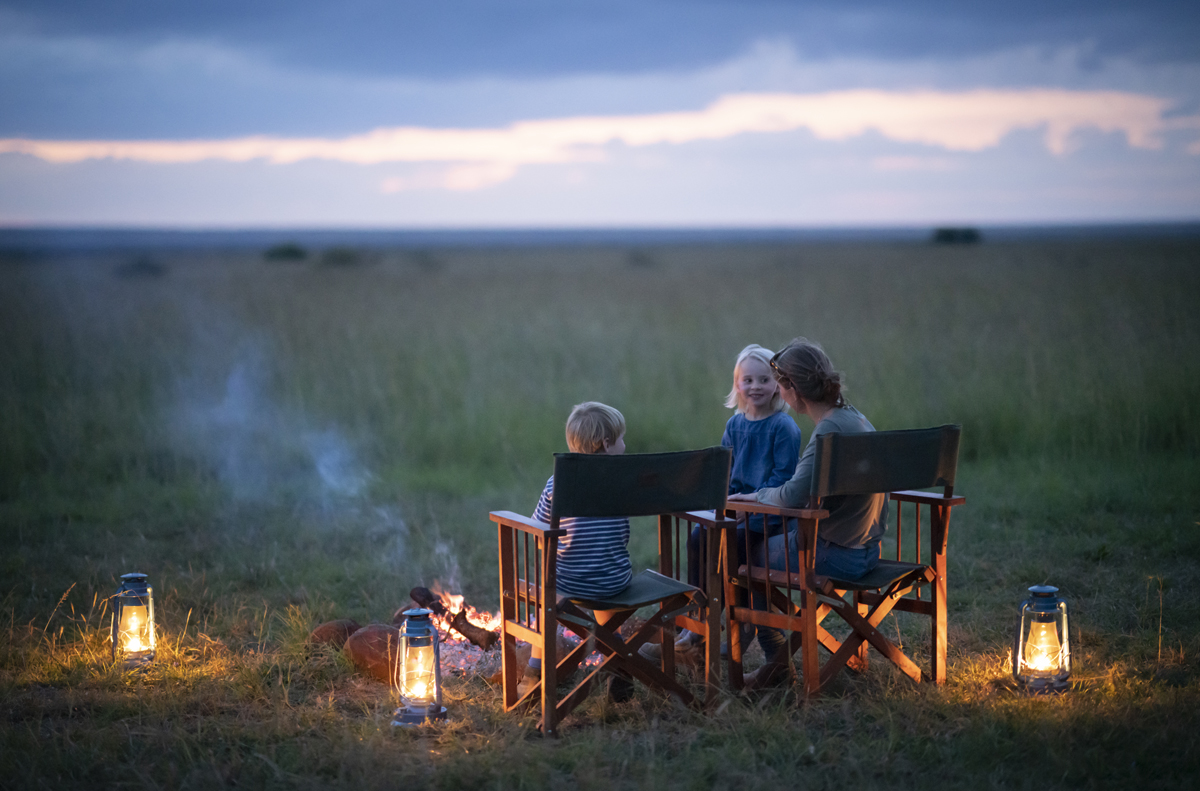
Where Did the African Sundowner Tradition Come From?
Like many traditions tied to safari culture, the sundowner has roots in the colonial era of African exploration and big-game expeditions in the late 19th and early 20th centuries.
Early explorers, hunters, traders, and railway surveyors traveling through Southern Africa often paused at day’s end for a restorative drink before dinner. Conditions were rugged, days were long, and evenings in the bush carried a unique beauty. As camps were established and safari culture evolved, the evening drink became ritualized – equal parts practicality, camaraderie, and ceremony.
The British influence was particularly strong, which explains the long-standing association between safari culture and gin and tonics. Tonic water originally contained quinine, used as a preventative against malaria, and British travelers stationed throughout Africa and India famously mixed it with gin to make it more palatable.
Thus, the iconic safari G&T was born.
Back then, sundowners were often relatively simple affairs: gin and tonics poured from silver flasks, beer pulled from coolers, perhaps accompanied by biltong or nuts around a campfire.
Today, however, the sundowner has evolved into something far more creative and regionally expressive.
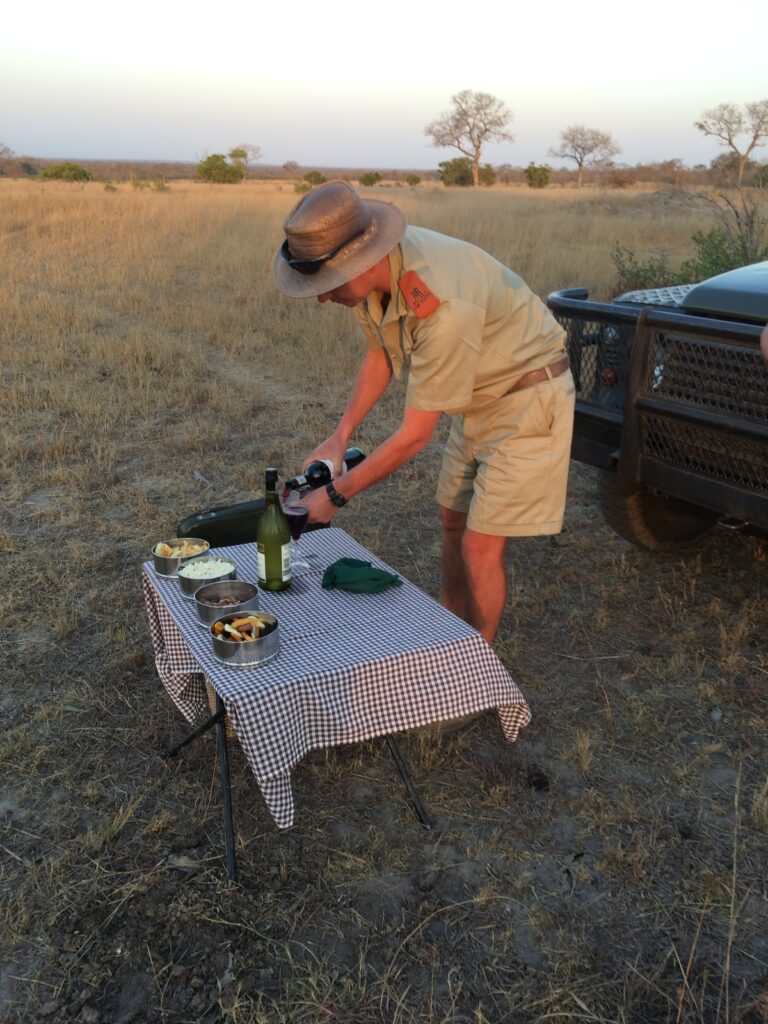
Sundowners Today: Less Colonial Relic, More Celebration of Place
While traditionalists still keep their sundowners simple and uncomplicated, some African safari camps have transformed the sundowner into an art form.
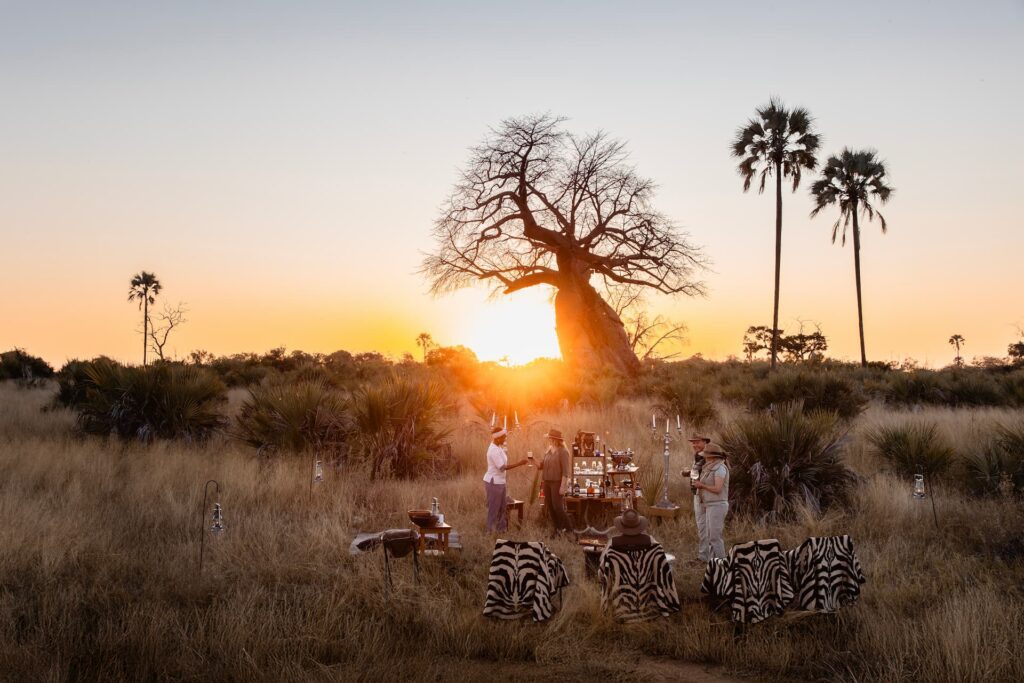
Yes, you can still order a classic G&T while watching the sun disappear behind a baobab tree. And honestly? You probably should at least once. Some traditions deserve to survive.
But today’s sundowners increasingly reflect the flavors, ingredients, and cultures of the places where they’re served. Every country adds its own personality to the ritual.
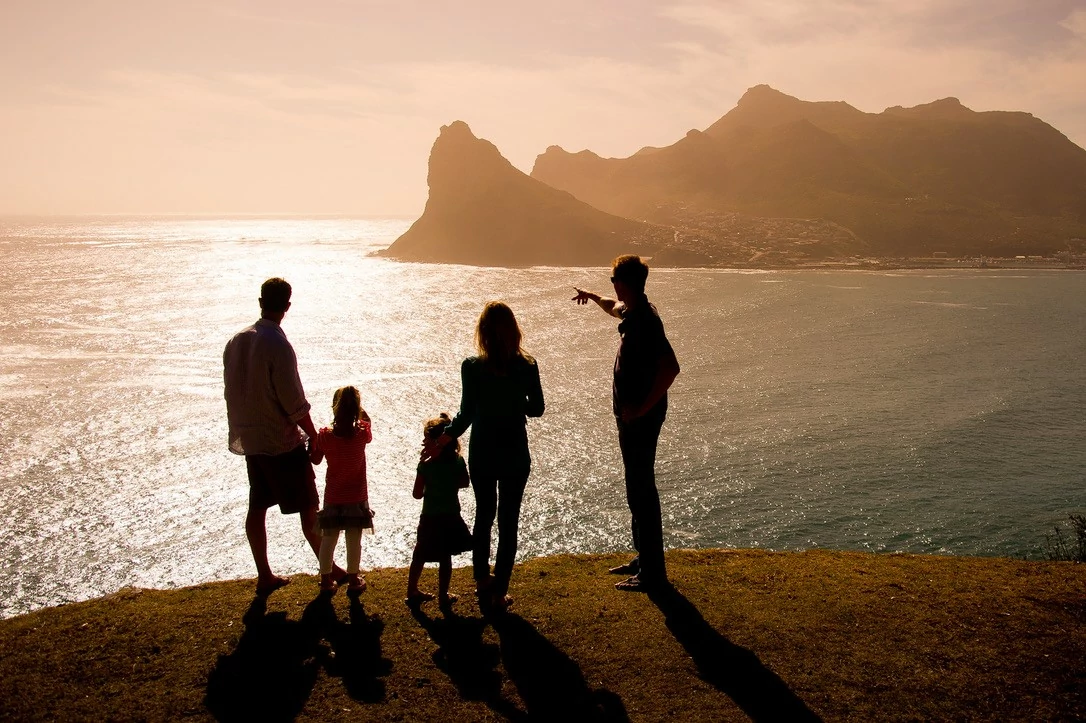
In South Africa, that might mean a chilled glass of Cap Classique sparkling wine paired with Cape Malay-inspired canapés.
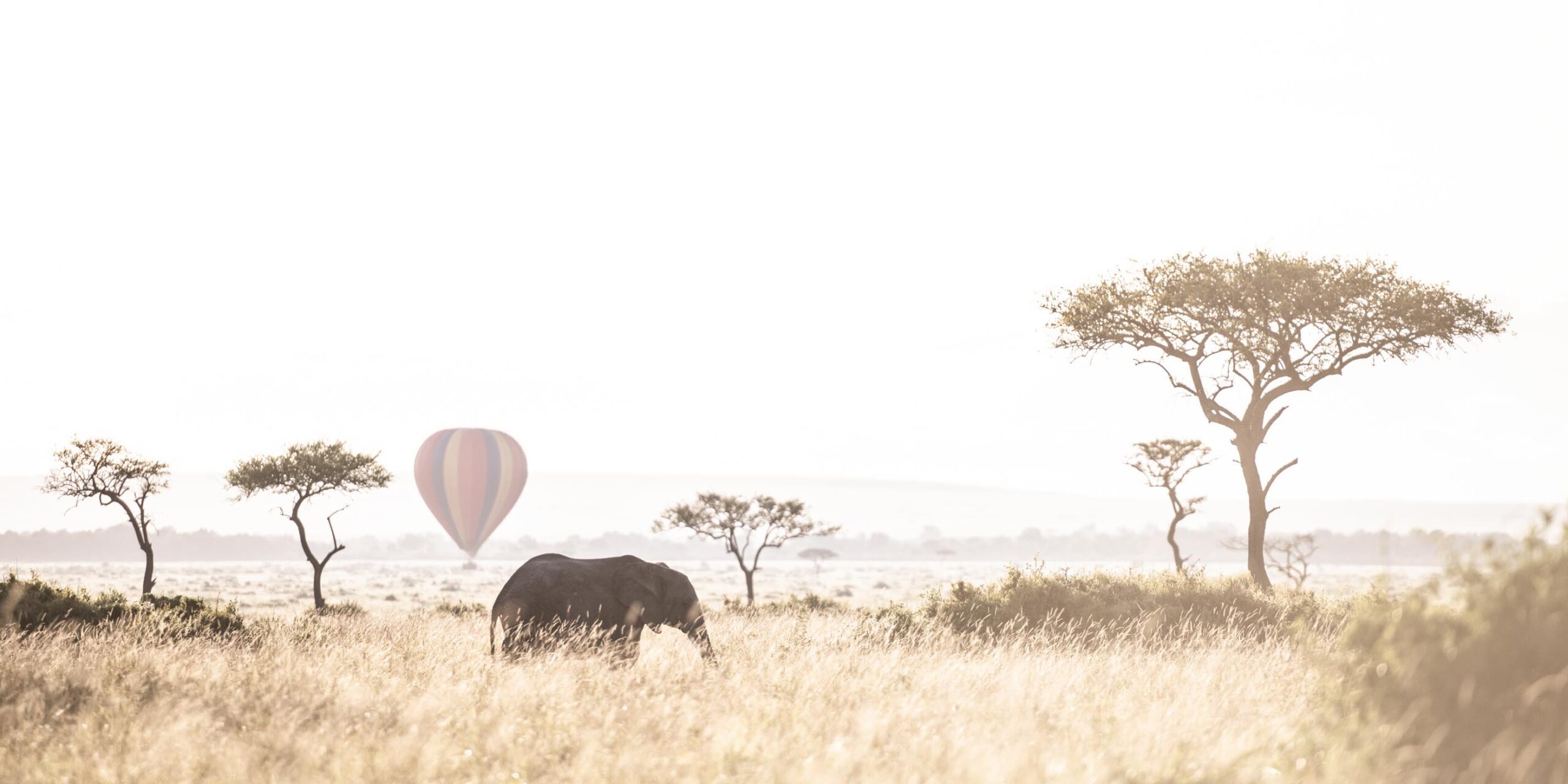
In Botswana, camps often lean into elevated bush luxury: handcrafted cocktails infused with marula fruit, rooibos syrups, or indigenous botanicals served alongside beautifully prepared small plates as elephants wander in the distance.
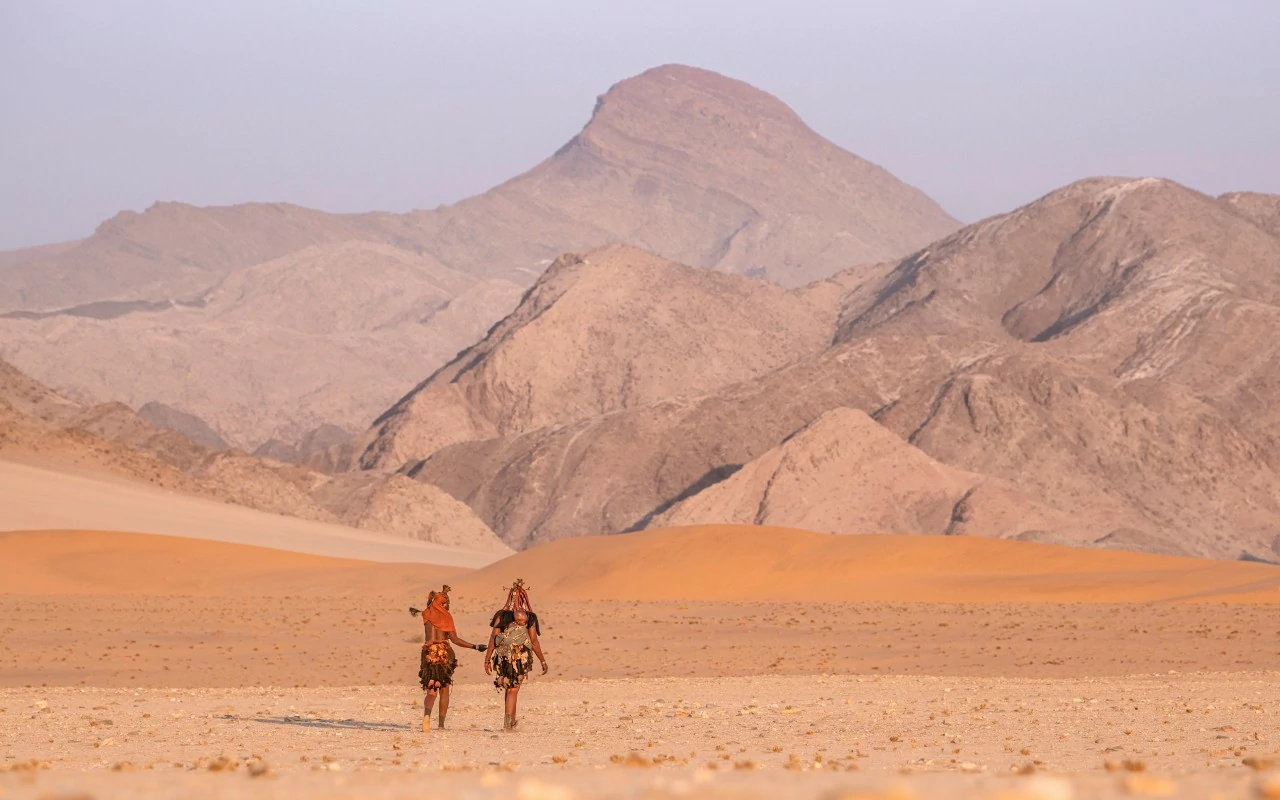
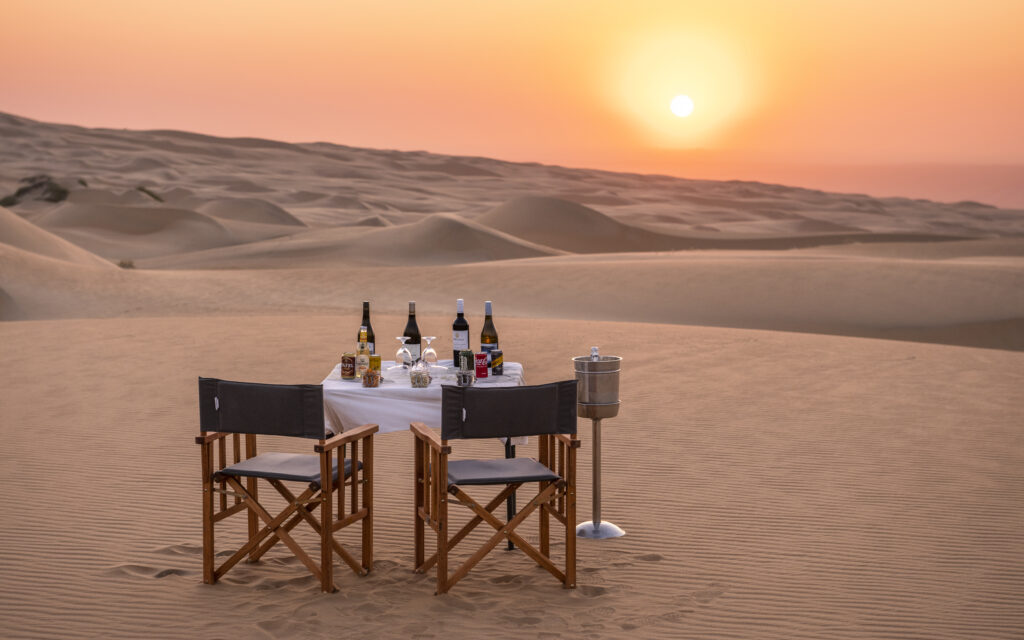
In Namibia, the vibe can feel more stripped-back and elemental — less polished, perhaps, but deeply atmospheric. Think cold Windhoek lagers, smoky grilled bites, and immense desert silence as the sky turns impossible shades of orange, pink, and violet over endless dunes and rocky escarpments.
Some camps lean toward elegant and social, with linen-covered tables and curated wine pairings. Others are decidedly simple: a guide pouring Amarula over ice from the back of a Land Cruiser while everyone stands barefoot in the sand watching the sky catch fire.
Neither is better… and both are unforgettable.
The Botswana Sundowner: Water, Wildlife, and Serenity
If Botswana had a signature sundowner mood, it would probably be serenity.
Botswana’s safari experiences – especially in the Okavango Delta – often feel deeply connected to water. Days unfold with explorations by mokoro canoe, motorboat, or safari vehicle through landscapes rich with birdlife, elephants, and astonishing tranquility.
By evening, the atmosphere becomes almost dreamlike.
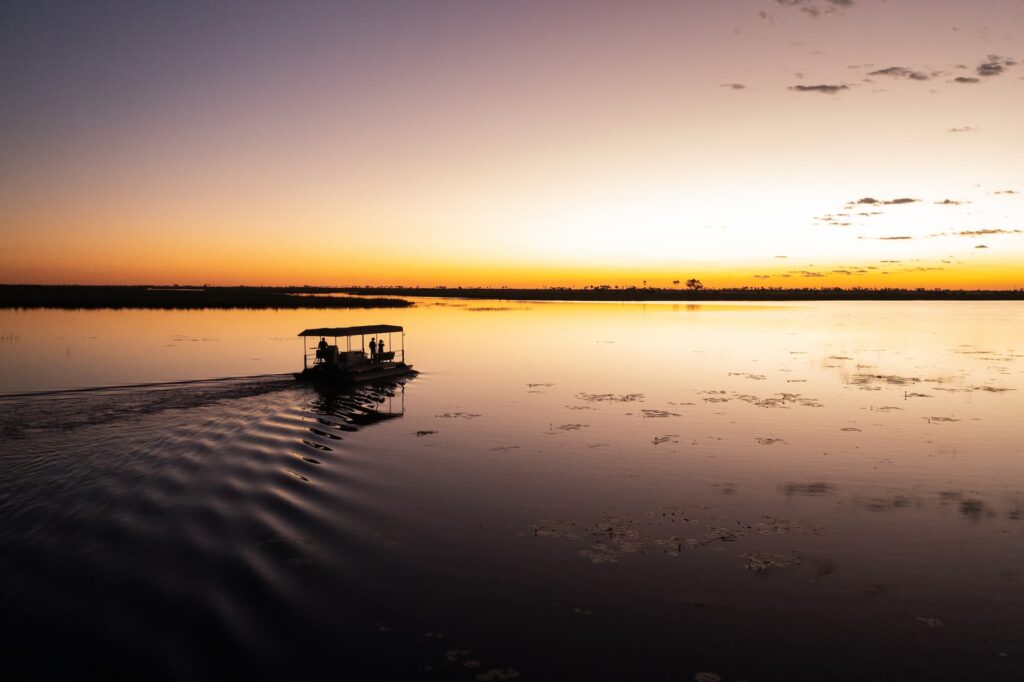
A Botswana sundowner might happen on a tiny palm-fringed island surrounded by floodplains glowing gold in the late light, or even on a boat exploring a water-filled lagoon. Hippos grunt somewhere in the distance. Frogs begin their evening chorus. The air cools just enough to raise goosebumps on sun-warmed skin.
Sundowners in Botswana feel sophisticated but understated. Excellent South African wines are common. Craft gins have become increasingly popular, especially those using regional botanicals. Fresh ingredients — citrus, herbs, ginger, wild fruits – frequently appear in cocktails – or if preferred, creative mocktails.
South African Safari Sundowners
South Africa approaches the sundowner with characteristic confidence and flair.
Here, the tradition blends safari culture with the country’s world-class food and wine scene. Even the most remote South African safari lodges often feature remarkable chefs, and sundowners can feel deliciously elevated.
Depending on where you are, sundowners may take place back at camp. Here, guests linger past sunset. Conversations stretch easily from wildlife sightings to travel stories to life back home. There’s laughter. Someone inevitably asks for “just one more” as the stars emerge overhead.
Namibia Sundowners: Desert Silence and Wide Open Skies
Then there’s Namibia.
Sundowners in Namibia feel different from almost anywhere else in Africa because Namibia itself feels different from almost anywhere else on earth.
The country’s landscapes are vast beyond comprehension. Ancient deserts stretch endlessly toward distant mountain ranges. Roads disappear into horizons that seem painted rather than real. There are places here where you can go hours without seeing another human being.
And sunset in Namibia? It’s cosmic. As the sun disappears, a blanket of stars like you’ve never seen before appears.
The ritual often is less about socializing and more about simply witnessing the landscape transform around you.
You might climb a granite outcrop with a cold drink in hand and watch shadows slowly swallow the desert floor below. Or settle into a simple camp chair atop a dune as the last sunlight ignites the sand into shades of crimson and gold.
Somewhere between the silence, the scale, and the stars beginning to appear overhead, people often find themselves growing unexpectedly reflective. Namibia has a way of doing that.
Why Travelers Fall in Love With Sundowners on Safari
The thing about sundowners is that they’re technically very small moments. Just a little while at the end of an active day.
A drink. A sunset. Maybe 30 or 40 minutes before dinner.
And yet, travelers return home talking about them with remarkable emotion. Why?
Because modern life rarely gives us permission to pause this completely. Most sunsets at home happen while answering emails, driving somewhere, making dinner, multitasking, or thinking ahead to tomorrow’s obligations. We barely notice them.
Africa’s sundowner ritual encourages you to do the opposite. To stop moving and look around. Notice the changing light. Feel the air cooling against your skin. Listen to birds settling into the trees.
Be exactly where you are.
Bringing the Sundowner Spirit Home
One of the best things about the sundowner ritual is that you don’t actually need to be on safari to practice it. The spirit of the sundowner can travel home with you.
A porch. A backyard. A beach. A mountain overlook. A balcony in the city. Anywhere the sky changes color at day’s end can become a small ceremony of slowing down.
Pour a drink you love. Put your phone away. Sit outside for twenty minutes. Watch the light shift. Chat with whoever is with you. Simple as that.
The magic isn’t Africa itself — though Africa has certainly perfected it. The magic is the intentional pause. The decision to end the day gently instead of rushing through it.
Of course, if you can experience a true African sundowner at least once in your life, we highly recommend it.
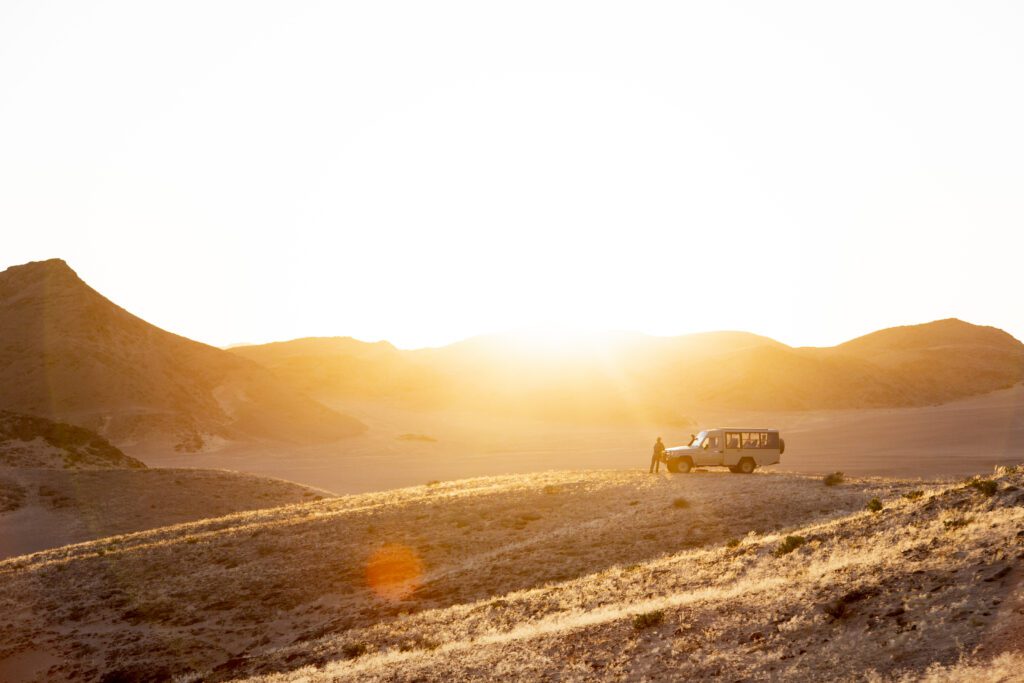
Preferably somewhere wild. Preferably somewhere quiet. Preferably with dust on your boots, a little sun on your shoulders, and absolutely nowhere else you need to be.
Dreaming of a late afternoon safari sundowner? PATH+PLAIN is here to help. Call 1-802-222-6320 or email info@pathplaintravel.com to start the conversation.